Jay Roberts
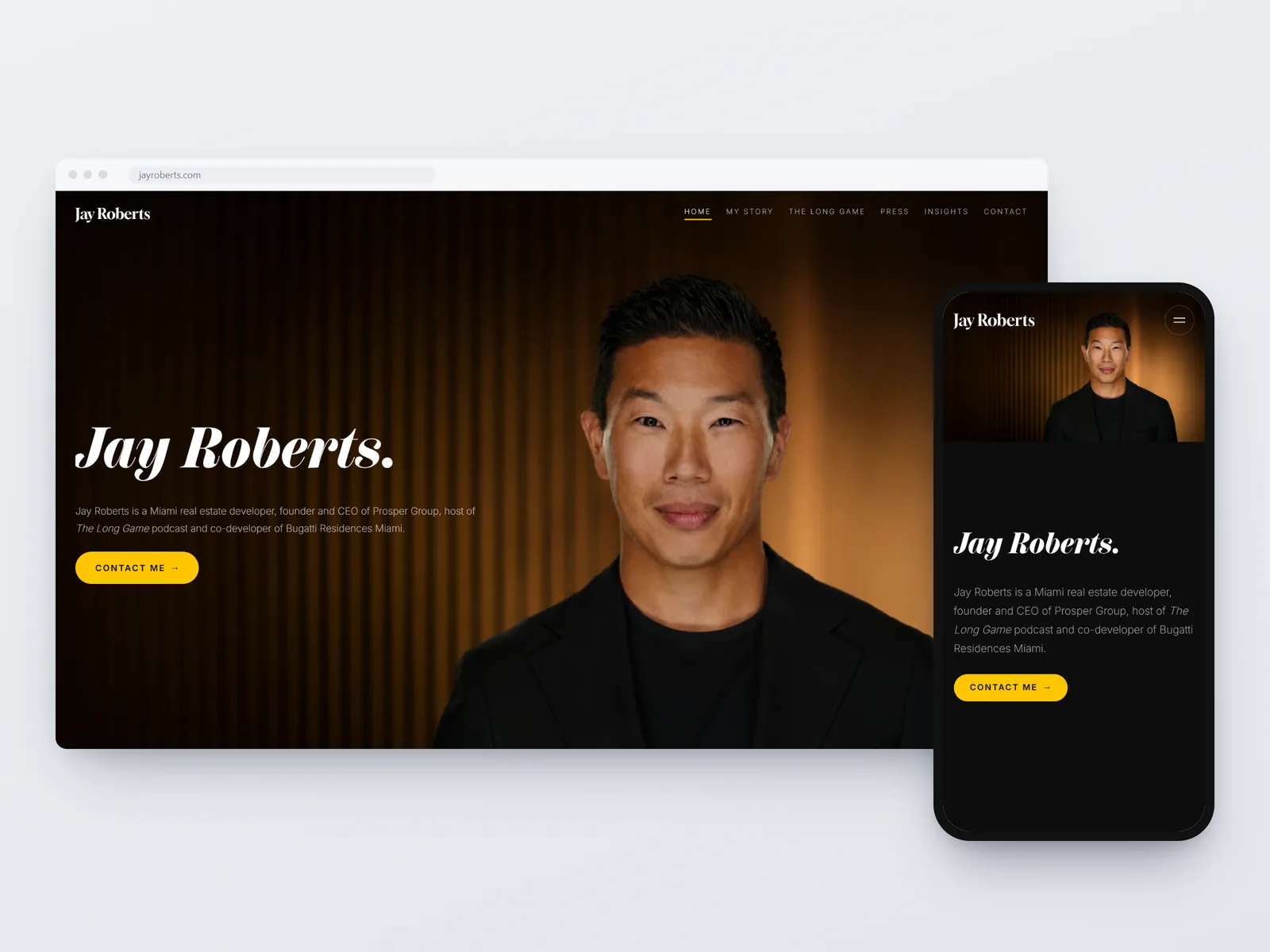
A personal brand website for Miami real estate developer Jay Roberts, connecting Prosper Group, The Long Game podcast, and his development work.
Before an investor commits or a landowner takes your call, they look at your website. We design websites for real estate developers that show what you've built, what's underway and who's behind it.


Who we work with
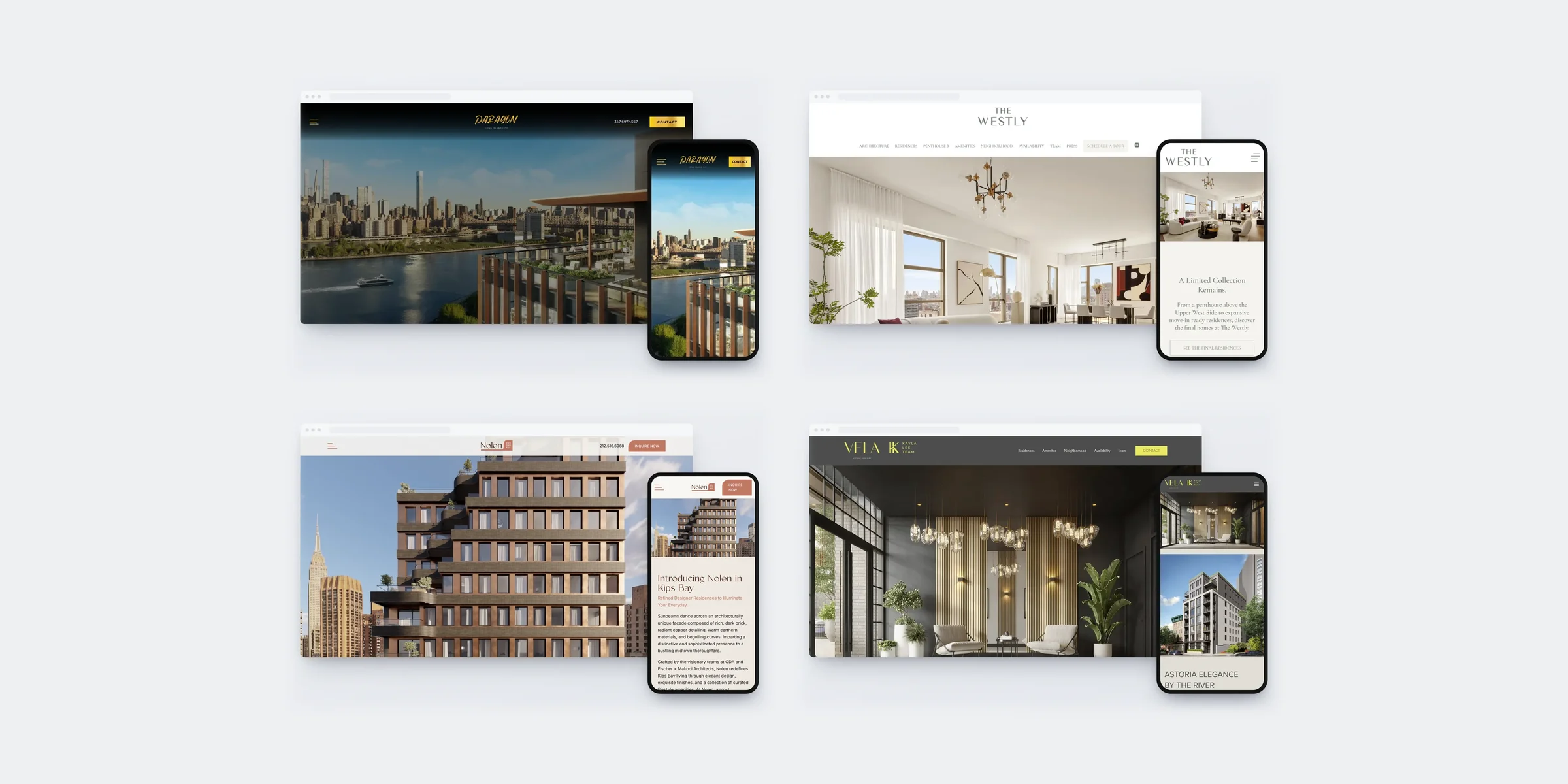
A selection of the websites we've designed and built for real estate developers.
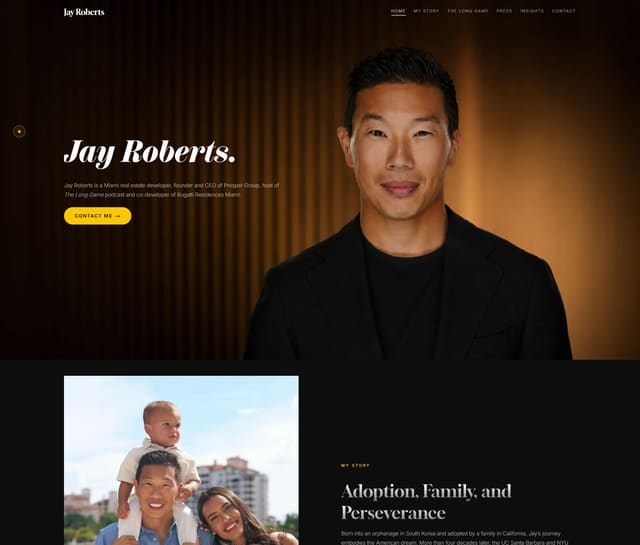
A personal brand website for Miami real estate developer Jay Roberts, connecting Prosper Group, The Long Game podcast, and his development work.
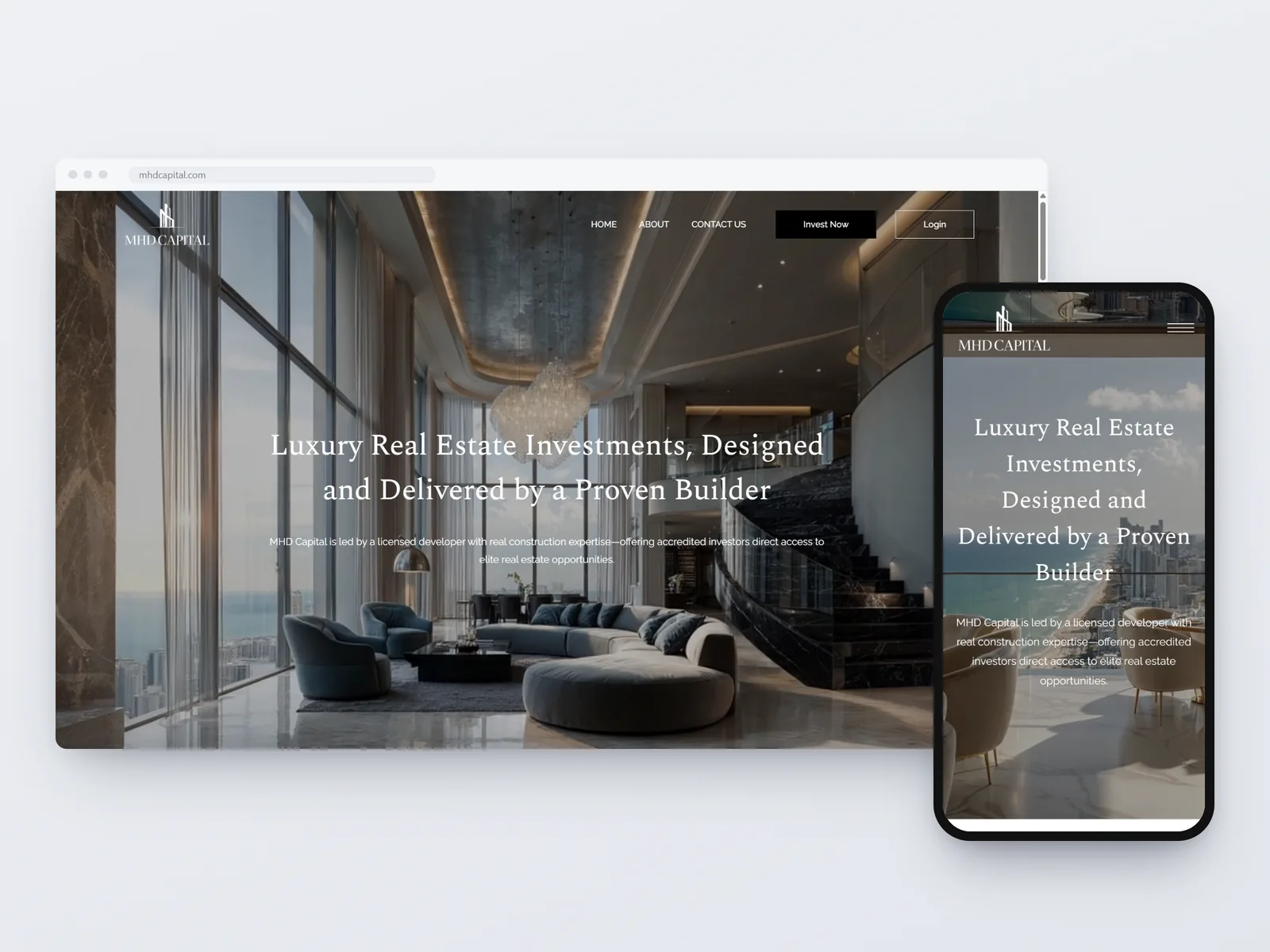
A website for MHD Capital, explaining its developer-led approach to luxury real estate investments and development opportunities.
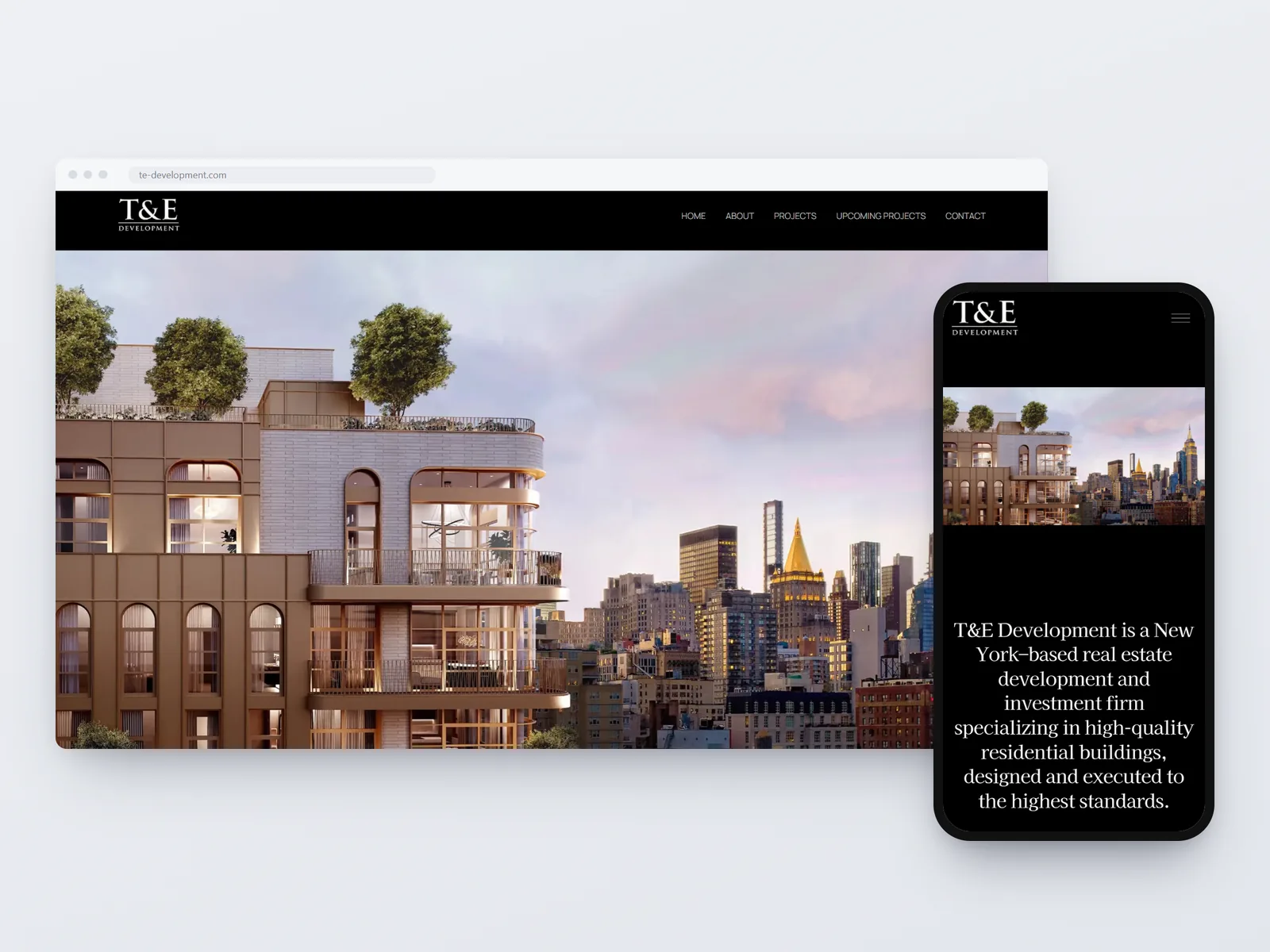
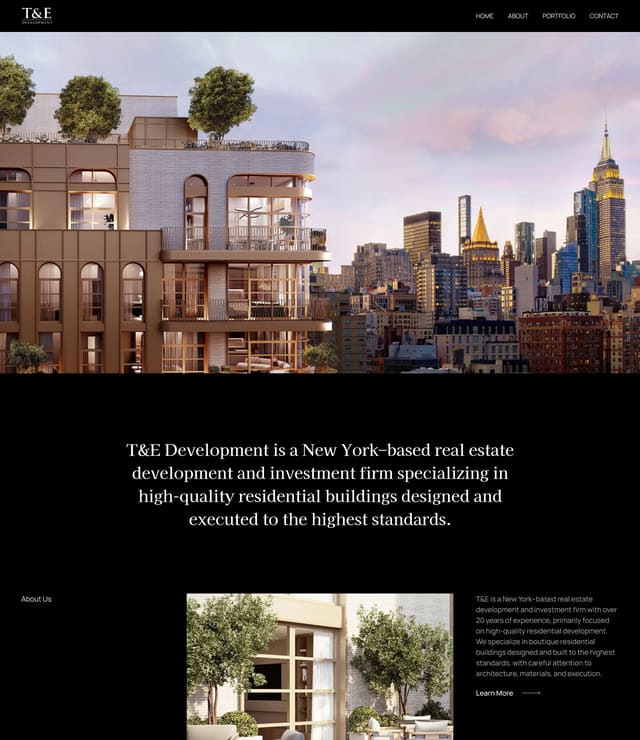
A content-managed website for T&E Development, a New York real estate development and investment firm, with a project timeline spanning more than 20 residential developments.
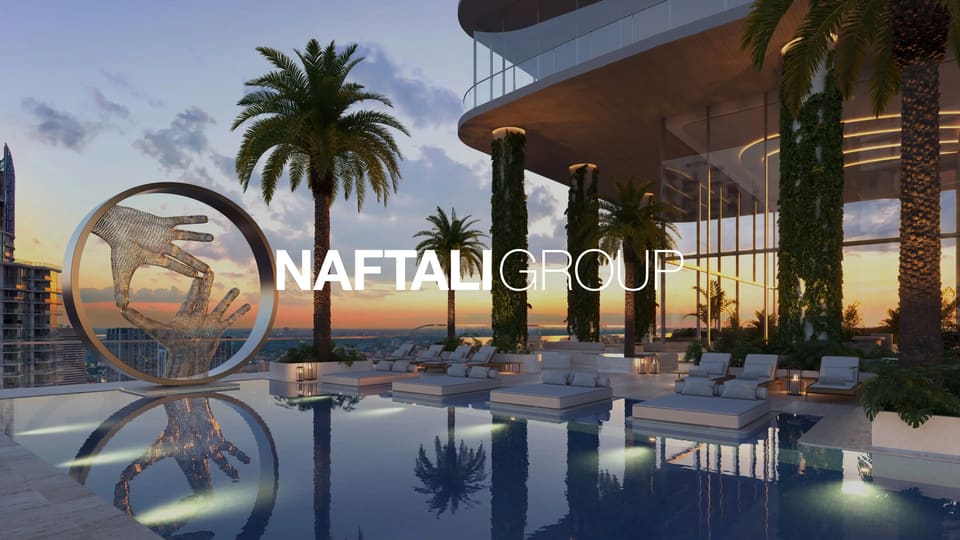
Ongoing web support for Naftali Group, keeping its corporate and luxury development websites current, fast, and consistent with their original design.
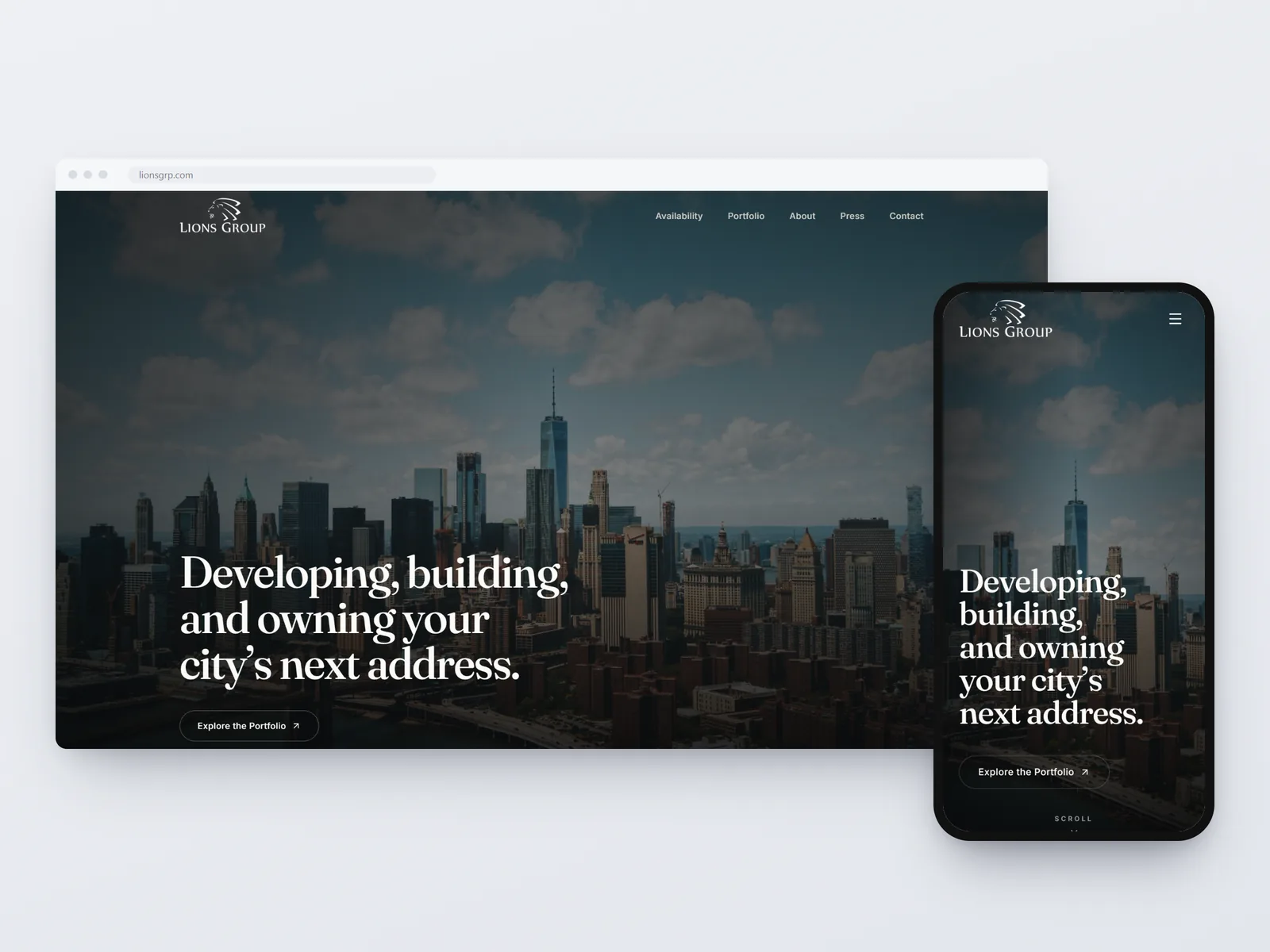
A content-managed website for Lions Group, a New York real estate firm that develops, owns, manages, and builds residential and commercial properties.
Show investors what you've built.
Start the conversationYears designing, developing, launching, and maintaining websites.
Websites launched across real estate, construction, hospitality, healthcare, and service businesses.
Industries served
Common Challenges
Investors, lenders, brokers and city officials all check a developer's site, and they look for the same things: finished projects, the team and proof you deliver. Renderings alone don't answer that.
The problem
Completed projects are buried, or missing photos and basic facts
What we do
A portfolio that leads with finished work: photos, location, size, type and status for every project, sorted by sector.
The problem
Investors and partners can't tell who runs the firm or what it specializes in
What we do
Team, history and approach pages that tell investors and partners who they would be working with.
The problem
Each new project gets a rushed page that doesn't match the rest of the site
What we do
A project page your team can reuse, so each new development launches with its own page in the same look.
The problem
Buyer, tenant, investor and broker inquiries all go to one generic form
What we do
Separate inquiry forms for buyers, tenants, investors and brokers, so you know who is asking before you reply. Registrations can go straight into Spark.re.
What goes into a developer website, from the project portfolio to the inquiry forms.
Every project with photos, facts and status, sorted by sector, location or phase.
The firm's history, leadership and approach, written for investors and partners.
A page or a standalone site for each development, ready for launch, sales or leasing.
Interactive Mapbox maps of where you build and what's nearby.
Separate forms for investors, brokers, buyers and press, tracked in HungryHub.
Both. Many developers have a company site for the firm and a separate site for each project in sales or lease-up. We can build either one, or both with a shared look.
Yes. A project page can start with renderings and a registration form, then add floor plans, availability and photos as construction moves along. Your team updates it in HungryHub.
Custom sites start at $5,000. The price depends on the number of projects, pages and integrations, and we quote it after a short call.
Yes. Registrations from your website can go straight into Spark.re with the details your sales team needs.
Settle who owns the domain and the site, how fast a teaser can go up and what happens after sellout. Our guide to choosing a developer website partner covers the options and the questions to ask.
Tools we connect
More real estate websites
Tell us about your firm, the projects you want to feature and who you need to reach. We'll suggest how to structure the site and send a quote.